
Below is a selection of Elena Diniz’s scripts that have appeared on screen.
I am Nair Jane
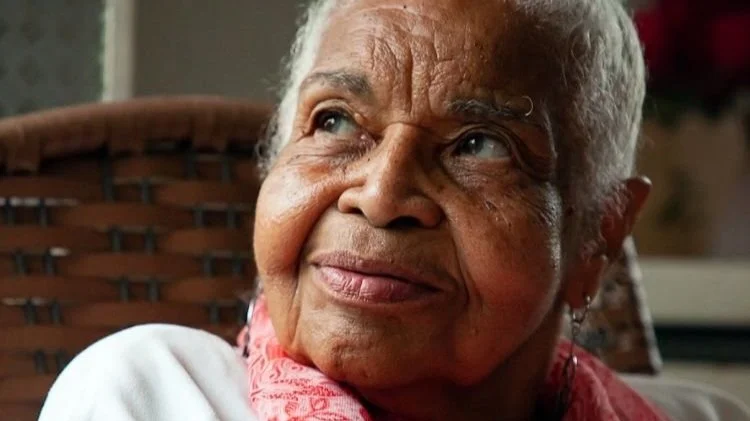
‘I am Nair Jane – The Struggle of Domestic Workers’ is a documentary directed by Carlos Pronzato and produced by the State Council for Women’s Rights (CEDIM/RJ). It tells the story of Nair Jane de Castro Lima, a 91-year-old renowned activist who participated in Brazil’s 1988 Constituent Assembly. Nair Jane was a pioneer in the fight for domestic workers’ rights in Rio de Janeiro. She was instrumental in founding the domestic workers’ union and co-founded the Unified Workers’ Central (CUT), Brazil’s largest trade union center.
The Voice of Social Movements in CEDIM
‘The Voice of Social Movements in CEDIM — Struggles, Conquests, and Challenges’ is a documentary directed by Eunice Gutman and produced by the State Council for Women’s Rights (CEDIM/RJ). The documentary brings together a series of testimonies about the actions, legacy, and trajectory of CEDIM/RJ since its foundation in 1987.

The Angel in the House
‘The Angel in the House’ is an experimental short film directed by Leila Marina and starring Luiza Lou. It follows Virginia Woolf’s journey as a writer at the beginning of her career, when she was still haunted by an angel figure — or what she called “Angel in the House.”

The Other
‘The Other’ is a short film directed by Leila Marina, starring Deise Manttuano and Vilma Melo. Set between reality and the subconscious, the story is centered on Anita’s internal journey as she decides to confront her deceased husband’s mistress.

The Friends of 68
‘The Friends of 68’ is a documentary about the political and social upheavals of 1968 in Brazil, a year marked by an oppressive military dictatorship. It tells the story of a group of friends who participated in a student assembly, known as ‘The Occupation of the Rectory’, that stood against the privatization of the Brazilian educational system. The gathering was violently shut down by the military police and resulted in the arrest of 400 students, galvanizing popular support and fueling the mobilizations that culminated into the period’s most iconic political protest: the March of One Hundred Thousand.
